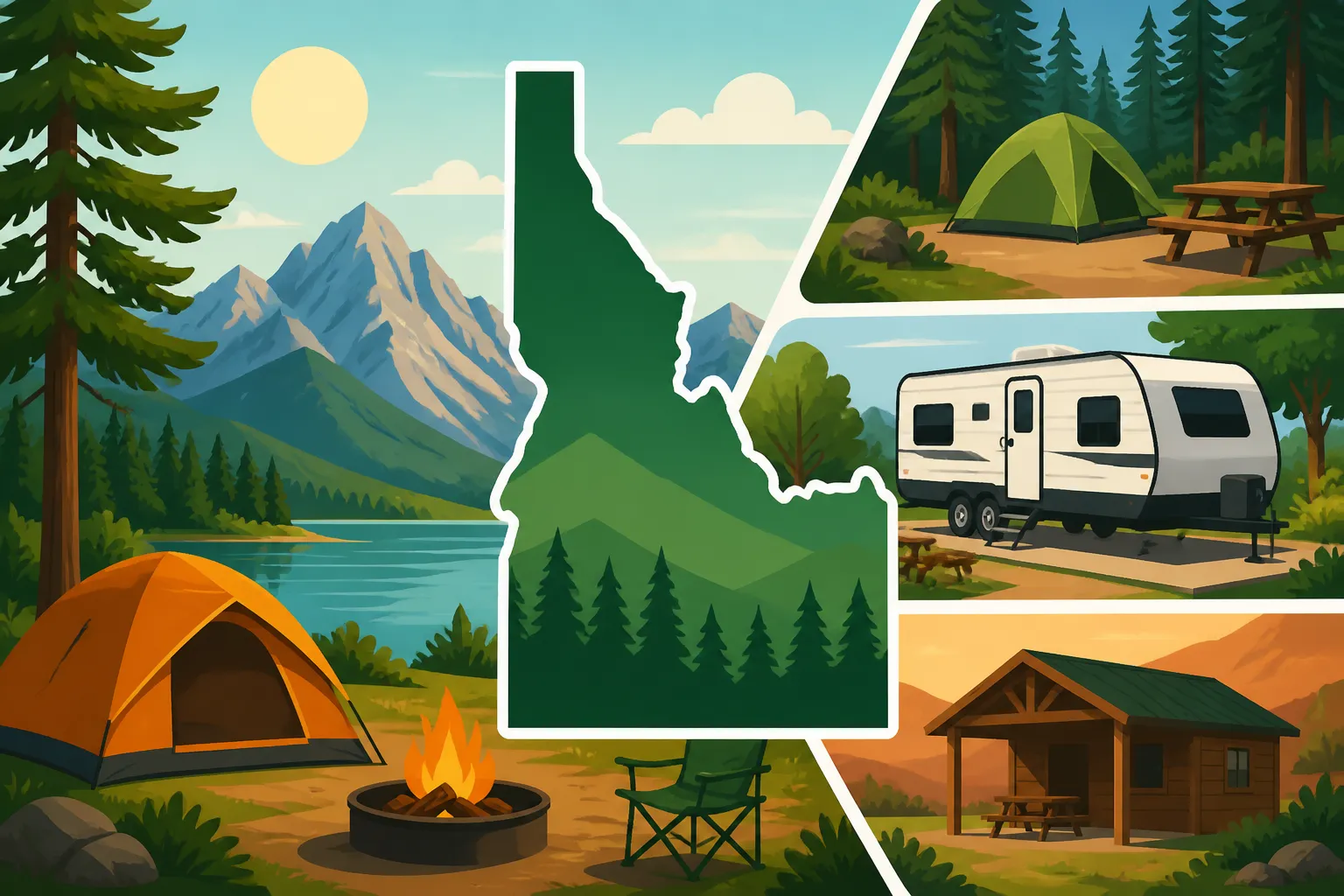
Camping in Idaho State Parks: Site Types, Rules and Getting a Spot
Choosing an Idaho state park campsite can mean sorting through different site styles, deciding which amenities matter, and figuring out whether a reservation is available. The details can vary from park to park, so a good plan starts with the trip itself, then checks the specific site and its rules. Here’s how to compare options, prepare, and improve your chances of landing a suitable spot.
Start with the trip you want to take
It’s easy to begin with a map or a list of available sites. A better first step is to picture the stay you want. Are you bringing a tent, an RV, or neither? Do you need power or water at your site, or would a more basic spot work? Are you hoping to stay near a lake, spend time on trails, or keep the drive to the campsite straightforward?
Those preferences affect which parks and sites are worth comparing. A lakeside location may suit a swimming or boating trip, while a quieter or more remote-feeling campsite may be a better match for a simple overnight. A cabin or yurt can be an alternative if you want to stay overnight without pitching a tent or bringing an RV. Idaho offers campsite, cabin, and yurt reservations at 30 state parks, according to Idaho Department of Parks and Recreation. Availability and the lodging options offered depend on the park, so check the specific park’s listing rather than assuming each kind of stay is offered everywhere.
Before you search, make a short list of what matters most:
- Sleeping setup: tent, RV, cabin, or yurt.
- Site services: power, water, sewer, or no hookups.
- Location: near the activities you plan to enjoy, or away from busy areas.
- Access: a site and approach that suit your vehicle and camping setup.
- Comfort needs: nearby restrooms, showers, or other facilities.
- Trip flexibility: whether you can change parks or dates if your preferred option is unavailable.
Try separating must-haves from preferences. If your RV needs electrical service, that may be non-negotiable. A particular view or loop may be a preference you can trade for a suitable site elsewhere in the park. This distinction helps you compare real options instead of rejecting every site that differs from your ideal.
It’s also useful to decide how much you want to arrange before leaving. Some campers want a confirmed campsite and a detailed plan; others are comfortable looking for an available option as they travel. Neither approach guarantees a spot. Check the park’s official information for how that location handles overnight stays and what choices are available for your dates. For a broader overview of campsite options, see Camping in Idaho State Parks: Site Types, Rules and Getting a Spot.
The setting matters, but so does the practical fit. A site that looks appealing in a photo may not have the services your equipment needs, and a site with the right hookups may not put you close to your preferred activity. Decide which trade-offs are acceptable before you start comparing.
Compare campsite styles before choosing a park
Campground listings can use terms such as standard, serviced, and primitive. Treat those terms as starting points, not as complete descriptions. A label may not tell you everything about the site surface, nearby facilities, access, or what is included. Read the individual listing carefully and confirm unclear details with the park.
The following table is a practical way to organize what to look for. It is not a guarantee that every park uses the same terms or offers every site style.
| What you may see in a listing | What to check before choosing | A useful fit when |
|---|---|---|
| Standard campsite | The site’s listed services, intended camping setup, location, and nearby facilities | You want to compare a conventional campground option without assuming what it includes |
| Serviced campsite | Which services are provided at the site, and whether they match your equipment | Your setup needs particular utilities |
| Primitive campsite | What is not provided, where facilities are located, and what you need to bring | You are prepared to camp with fewer site services |
| RV campsite | The listed hookups, site dimensions or fit information, access details, and parking arrangement | You are bringing a recreational vehicle and need the site to suit it |
| Tent campsite | The surface, space, location, and any site-specific information that affects tent placement | You are sleeping in a tent and want to understand the available space |
| Cabin or yurt | Sleeping arrangements, furnishings, utilities, access, and what guests need to supply | You want an overnight stay without using a tent or RV |
A label like “serviced” isn’t enough to tell you whether a site has the particular service you need. For a closer look at that term, see What Serviced Means on an Idaho State Park Site List. If your setup depends on electrical service, water, or sewer, check the listing for each specific site instead of relying on a general campground description.
RV campers should match the vehicle and its needs to the site information before reserving. Idaho Department of Parks and Recreation describes the range as a variety of RV experiences. That range makes it especially important to verify the specific site’s setup: a campground may have different options, and a park’s overall RV facilities don’t tell you what is available at a particular spot. Check the listed hookups and access details, and contact the park if a key fit question remains unanswered.
If you can manage without hookups, compare the advantages of a simpler site against the extra planning it requires. You may need to bring or manage more of your own supplies, and the facilities you expect may not be close to the site. For help thinking through that trade-off, see Planning for an Idaho State Park Stay Without Hookups.
Tent campers should look beyond the word “campsite.” Check what the listing says about the site itself, the distance to the facilities you plan to use, and whether the location makes sense for your sleeping and cooking setup. Don’t assume that a site shown in the same campground as another has identical features.
If you’re considering a cabin or yurt instead, compare the stay as lodging rather than assuming it works like a campsite. Check sleeping arrangements, what is provided, access, and whether you’ll need to bring supplies you normally use at camp. Cabins, Yurts and Cottages in Idaho State Parks: How They Compare can help you decide which kind of overnight stay to investigate.
Match amenities to your equipment and comfort needs
Amenities affect how a stay works day to day. A campsite can be a good fit on paper yet frustrating if it doesn’t support your equipment or if the facilities you rely on are inconveniently located. Read the site details with your actual routine in mind: where you’ll sleep, how you’ll prepare meals, how you’ll manage water, and what you need to stay comfortable.
For an RV, write down the services your vehicle needs and compare that list with the specific site information. Don’t treat the words “RV campground” as a promise that every site has the same hookups. If your rig requires a certain utility, confirm that the selected site provides it and that the site is appropriate for your setup. If any access or fit detail is unclear, ask the park before finalizing the plan.
For a tent, consider more than whether a tent is allowed at the site. Think about the sleeping area, the ground surface if described, space for your gear, and how exposed or busy the location may feel. Site photos and maps can help you form a picture, but they may not answer every practical question. Check the written listing as well.
Facilities can matter just as much as the site itself. If you expect to use restrooms or showers, find out what the park says about their location and availability. If water is important, establish whether the information refers to water at the site or a source elsewhere in the campground. A general mention of water or restrooms doesn’t necessarily explain the arrangement that will matter to you. When the listing is unclear, ask the park directly rather than planning around an assumption.
Think through your supplies, too. A more basic campsite may call for extra preparation, while a site with services could make some parts of the stay easier. Neither is automatically better. A simpler option can work well when your equipment and expectations fit it; a more developed site may be worth prioritizing if you depend on particular facilities.
Other questions to check before choosing include:
- Is the site described as suitable for the kind of camping setup you’re bringing?
- Are the services you need listed for that specific site?
- Does the listing explain where shared facilities are located?
- Is there information about access or parking that could affect your arrival?
- Are there seasonal notices that could change the facilities or access you expect?
- Are there park-specific restrictions that affect your planned activities or equipment?
Seasonal conditions can change the practical value of a site. A park or campground may have different services or access at different times, so don’t assume information from a past trip will apply to a new visit. Check current park notices for the dates you plan to go. Fall and Spring Camping in Idaho State Parks: What Shuts Down is useful when you’re planning outside the height of the warm-weather season.
A little extra checking is usually easier than arriving with an incompatible setup. Keep a note of what the park confirmed and the name or description of the site you’re considering. That makes it simpler to review your plan later or compare it with another option.
Plan how you’ll get a campsite
The availability of a campsite is tied to the park, the dates, and the type of site you want. Start with the official information for the park rather than relying on an old screenshot, a third-party summary, or what was available during a previous visit. Park details and inventory can change, and the current listing is the best place to check the options shown for your trip.
Idaho offers campsite, cabin, and yurt reservations at 30 state parks, according to Idaho Department of Parks and Recreation. That does not mean every park has every lodging type or that a specific site will be available when you want it. Use the reservation information for the park and dates you’re considering, and read the details that apply to the exact site.
A practical search process looks like this:
- Choose a flexible date range if you can. If your travel dates can shift, compare nearby dates as well as your preferred ones.
- Select the park based on your trip priorities. Decide whether the setting, activities, services, or access matters most.
- Filter by the kind of stay you need. Look for a tent site, RV site, cabin, or yurt that fits your setup.
- Read the individual listing. Check amenities and restrictions rather than choosing from the campground name alone.
- Confirm the total trip details before completing a reservation. Review the dates, selected site, and current terms shown by the official system.
- Save the confirmation and check for updates. Keep the reservation information handy and review park notices before traveling.
For a closer look at how the process works, see How Idaho State Park Campground Booking Works: Account, Cart, Payment. To understand how far in advance you may be able to plan, see How Far Ahead Can You Book an Idaho State Park Campsite?. These details can matter if you have fixed travel dates or are aiming for a popular time.
If the site you want is unavailable, avoid treating that as the end of the search. Check whether another site in the same campground fits your needs, whether another park suits the trip, or whether a different date would work. A site that is less scenic but better matched to your equipment can be a more comfortable choice than an unsuitable site at your preferred location.
If you’re searching close to your travel date, check the park’s current information for what options it recognizes. Don’t assume that a campsite is available just because it appears empty, or that every campground accepts unreserved arrivals in the same way. The terms and process may differ, so follow the official instructions for that park. First-Come Campsites in Idaho: Where Walk-Up Camping Still Works explains why it’s important to confirm the arrangement rather than count on a walk-up spot.
Before completing a reservation, make sure you understand the cost shown for your specific stay and any separate charges that apply. Costs can depend on the chosen site and the current terms; check the official reservation details rather than relying on an old price. How Much Does a Campsite Cost at an Idaho State Park? offers more help with what to check when budgeting.
Understand the rules and check the site details
The most important basic rule is that you should camp only where camping is designated. Idaho Department of Parks and Recreation states: Camping is permitted only in designated areas. Don’t treat an open-looking patch of ground, a parking area, or an appealing spot beside a trail as permission to camp. Use the park’s designated overnight areas and follow the information posted for your chosen location.
Beyond that basic point, avoid assuming that a rule at one Idaho state park applies in exactly the same way at another. A campground, site, or facility may have specific conditions, and details can change. Check the park’s official page and signs for the location you’ll use. If the official information doesn’t answer a question, ask park staff before acting on a guess.
A useful pre-trip rules check can cover:
- Where overnight stays are allowed: confirm the designated campground or lodging area.
- What the site allows: check whether its description fits the equipment and activities you have planned.
- Pets: look up where pets are allowed and any conditions that apply to your stay. See Pets in Idaho State Parks: Where Dogs Can Go and Where They Can’t.
- Fire use: check the current park information and any applicable official notices before planning to cook or gather around a fire. Conditions and restrictions can change. See Campfire Rules in Idaho by Land Type: Parks, Trust Land, Forests.
- Noise and visitors: look for the park’s current instructions rather than assuming another campground’s rules carry over.
- Vehicles and parking: confirm where your vehicle may be left and whether the site information addresses additional vehicles.
- Facilities and waste: check the park’s directions for using facilities and disposing of waste.
Fire rules deserve their own check because they can change with conditions. Don’t rely on a past trip or a general statement about campfires. Before leaving, consult the official information for your park and check again when you arrive. If a posted instruction differs from your expectations, follow the current direction from the responsible agency or park.
Pets are another area where a broad assumption can cause trouble. Don’t infer that a pet may go everywhere simply because a campground accepts pets, or that one park’s practice is the same as another’s. Check the relevant park information for the places you plan to visit, including your campsite and any facilities or recreation areas on your itinerary.
Make your questions specific. “Is this campground pet-friendly?” may not establish whether a particular lodging unit accepts pets or whether a dog can accompany you to the activity you have planned. “Does the site have water?” may not establish whether water is available at the site or elsewhere. Asking about the exact site, dates, equipment, and activity makes it easier to get a useful answer.
If you find conflicting information, prioritize current official notices and instructions at the park. Older trip reports, general descriptions, and photographs can help you get a feel for a place, but they shouldn’t override current rules or site-specific information. When in doubt, pause and confirm rather than risk setting up somewhere that is not designated for camping or using a facility in a way the park does not allow.
Prepare for arrival and have a backup plan
A reservation or a carefully chosen site is only part of a smooth stay. Before traveling, save the park directions, your reservation details if you have them, and the description of the site you selected. Check current park notices close to departure, especially if access, weather, fire conditions, or seasonal services could affect your plans.
Plan your arrival around the actual information provided by the park. Don’t assume that a visitor center or staffed office will be available when you reach the campground. Review any arrival instructions and make sure you understand what the park says to do if you arrive outside staffed hours. If something is unclear, ask the park in advance using contact details from its official website.
Pack according to the site’s actual services rather than what you hope will be there. If you’re staying at a basic site, bring the supplies needed to manage without services you haven’t confirmed. If you’re in an RV, make sure your equipment matches the hookups listed for that site. For a season-specific packing checklist, see Camping Essentials for an Idaho State Park Weekend, Season by Season.
A simple arrival routine can prevent avoidable mix-ups:
- Check that you have reached the correct park and campground.
- Compare the site information with the site you are directed to use.
- Confirm that your equipment fits the listed arrangement.
- Read posted instructions before setting up.
- Ask park staff if an important detail is unclear or the site appears different from its description.
Give yourself an alternative in case the original plan doesn’t work. Your backup might be another site that supports your equipment, another park with a suitable option, or a different travel date. A backup plan is especially useful if you’re traveling with a rig that needs particular services or if your dates cannot move easily.
If you’re considering a first-come option, don’t plan as though a space is guaranteed. Confirm how the specific campground handles availability and what the official instructions say about arriving and registering. Be ready to use your backup if no suitable site is open. No Plan, Peak Season: Hunting for an Idaho Campsite at the Last Minute offers related planning ideas for travelers who have limited flexibility.
Once you’re settled, continue to follow the park’s posted directions. Keep your camping activity within designated areas, use the facilities as instructed, and check with staff rather than improvising when something is uncertain. Those habits help protect the park and reduce the chance that a small misunderstanding turns into a problem during your stay.
Frequently Asked Questions
Can I camp anywhere inside an Idaho state park?
No. Camping is allowed in designated areas, so use the park’s official information to identify the approved overnight locations.
Does every Idaho state park offer the same campsite types?
No. Options and services vary by park and site. Check the specific listing for the campground or overnight stay you’re considering.
What should I do if my preferred campsite is unavailable?
Compare other suitable sites, nearby dates, or another park. If you’re looking for a last-minute option, confirm the park’s current instructions and keep a backup plan.
How do I know whether a campsite has the amenities I need?
Review the listing for the exact site and confirm anything that remains unclear with the park. Don’t assume a campground-wide description applies to every site.
Sources
- Idaho Department of Parks and Recreation — Reservations, Discounts, Policies & Info – Department of Parks and Recreation (checked November 23, 2026)
- Idaho Department of Parks and Recreation — RVing – Department of Parks and Recreation (checked November 23, 2026)
Disclaimer
This article is for general informational purposes only and does not constitute professional advice. Laws, prices and regulations vary by location and change over time. Consult a qualified professional for guidance on your specific situation. Idaho Camping & RV is not a government agency and is not affiliated with any government agency.
